 EN
EN

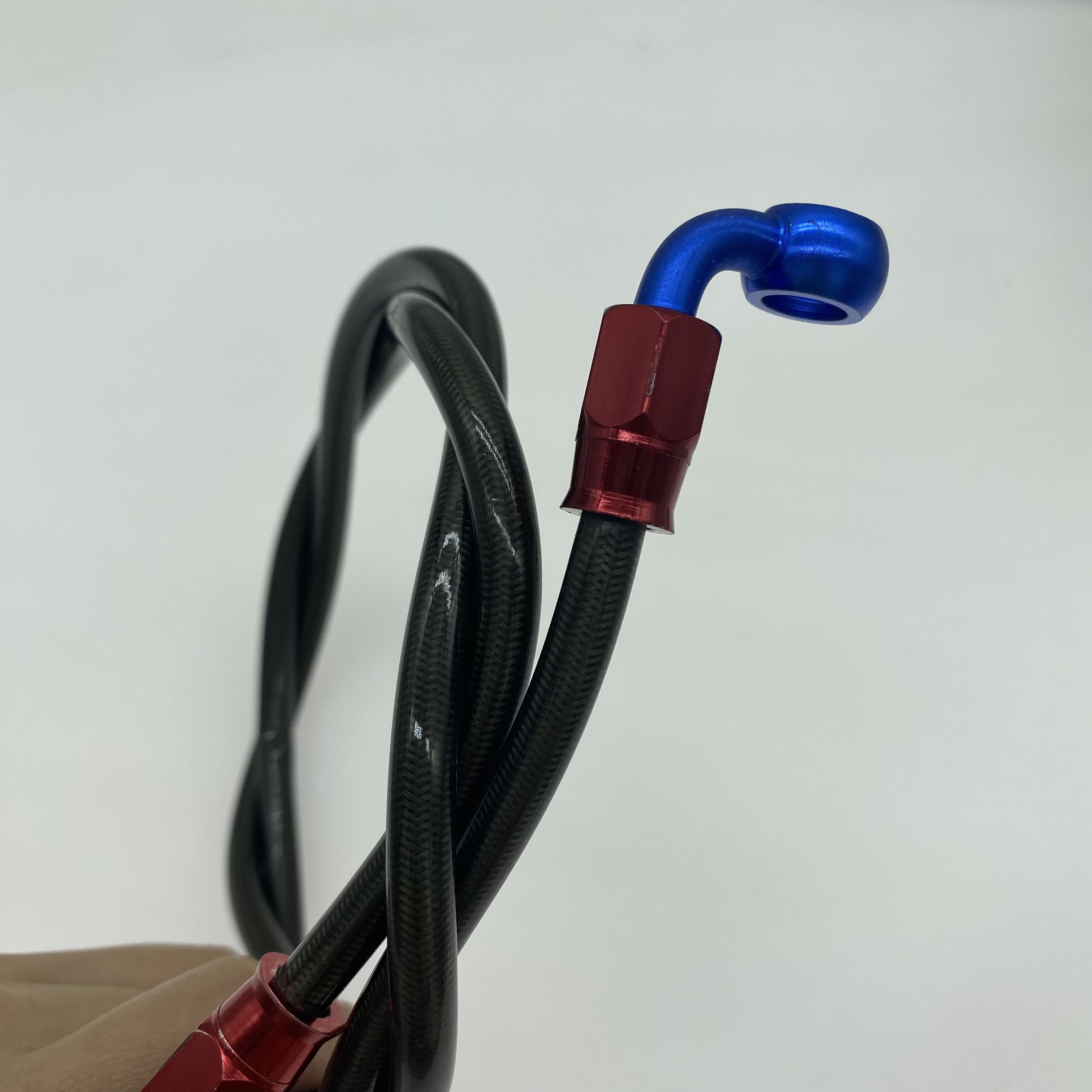
How Brake Line Material Affects Braking Response and Pedal Feel
The connection between brake line material and hydraulic responsiveness
What kind of material makes up brake lines really matters for how well the hydraulic system works, particularly when every millisecond counts on the racetrack. Pressing down on the brake pedal should send fluid pressure straight to those calipers without losing any power along the way. But rubber brake lines have a problem: they tend to swell by about 15% when subjected to intense pressure levels often seen during races where pressures can go beyond 1,500 psi. As these hoses stretch out, they actually soak up some of that precious hydraulic energy. The result? Slower caliper response times, wasted kinetic energy turning into unwanted heat rather than actual stopping power, and longer distances needed to bring vehicles to a halt. That's why many performance shops recommend materials that don't stretch so much. These stiffer options maintain better hydraulic control, making sure most of that pedal pressure gets converted right away into effective contact between pads and rotors.
Material composition: Rubber, nylon, and PTFE in brake lines
Brake line materials exhibit distinct performance profiles:
| Material | Expansion Rate | Temperature Range | Durability |
|---|---|---|---|
| Rubber | High | -40°C to 120°C | 3–5 years |
| Nylon | Low | -50°C to 135°C | 7–10 years |
| PTFE | Minimal | -70°C to 260°C | 10+ years |
The polymer structure of rubber allows molecules to move around when pressure is applied, which causes delays in response time and eventually leads to wear and tear over time. Nylon has a different approach with its semi crystalline structure that fights against deformation while still keeping some flexibility needed for proper suspension movement. PTFE material expands almost nothing at all, but it needs extra protection like braiding to stand up to mechanical stress in real world conditions. Most racers find nylon strikes just the right note for their needs. It provides enough stiffness so the hose doesn't balloon out under pressure, but remains flexible enough to work with the chassis movements during installation without too much hassle.
Why nylon-lined brake lines deliver firmer pedal feel
The dense molecular structure of nylon allows for almost instant hydraulic response, sending around 98% of the input pressure straight to the calipers in just a fraction of a second. Rubber is different though, it creates what mechanics call a compressive delay before transferring all that force, which leads to that mushy feeling drivers hate so much on the brake pedal. Nylon cuts down on this damping effect significantly, giving riders much better control when they need to modulate brakes at the limit, something that makes all the difference when adjusting speed into tight corners. Another big plus for nylon is how resistant it stays to fatigue. Over those long endurance races, rubber brake lines tend to get softer and less responsive as time goes on, but nylon maintains its performance level throughout the entire event without losing any of that initial sharpness.
Reduced Expansion: How Nylon Brake Lines Enhance Hydraulic Efficiency
OEM Rubber Lines and the Problem of Ballooning Under Pressure
The standard rubber brake lines from original equipment manufacturers aren't really built for top performance but rather for keeping costs down, ensuring driver comfort, and lasting through regular service intervals. When brakes get slammed hard, these lines tend to expand outward what folks call ballooning and this expansion actually soaks up some of the hydraulic pressure meant to push those calipers into action. What happens next? Well, drivers end up with mushy pedals, unpredictable responses when stopping suddenly, and generally worse system performance. On race tracks where brake pressures often hit over 2000 psi regularly, this kind of expansion becomes a serious problem. It throws off the precision needed for consistent lap times and creates safety concerns nobody wants to deal with mid-race.
Superior Pressure Resistance of Nylon-Lined Brake Lines
Brake lines lined with nylon tackle the problem of ballooning using a layered approach. Inside there's a nylon core that keeps things stable dimensionally, and outside we have braided reinforcement that protects against wear and handles high pressure situations better. Labs have tested this stuff and found that compared to regular rubber hoses, these nylon ones expand radially by around 70 to 80 percent less when subjected to those intense racing pressures. What does this mean for actual performance? Well, the force gets transferred almost instantly, the brake pedal feels much firmer underfoot, and the modulation becomes more predictable. This matters a lot when pushing through tight corners or maintaining that delicate balance on the edge of lockup during long braking events. Since so little energy gets wasted from the hose itself deforming, drivers end up with consistent stopping power they can really trust and rely on race after race.
Nylon vs. Braided and PTFE Brake Lines: Performance Comparison for Racing
Braided stainless steel hoses: Benefits and limitations in racing
Stainless steel braided brake lines feature a PTFE lining wrapped in a stainless steel weave, giving them great resistance to pressure while expanding almost nothing at all. The way they're built gives drivers that crisp pedal feel everyone wants when pushing limits on race tracks. But there's a catch. Those stiff outer layers get damaged pretty easily by rocks and dirt flying around during races, particularly bad on gravel tracks where things get really rough. Putting these lines in place isn't simple either because they don't bend much and are pretty stiff stuff. Makes life tough in cramped engine compartments. And let's not forget weight considerations. Steel braided options weigh about 1.2 to 1.8 pounds extra per axle compared to regular nylon hoses. That added weight sitting right above the wheels messes with how the car handles and affects how consistently tires stick to the road surface.
Nylon vs. PTFE-lined brake lines: Durability, cost, and performance
PTFE does really well when it comes to resisting chemicals and handling heat, but when we look at what matters most for racing applications, nylon actually performs better in several important ways. Motorsport testing shows that nylon can handle vibration stress about 37 percent longer than regular PTFE under tough conditions. Both materials keep hydraulic pressure pretty stable during repeated hard braking tests, staying within roughly 2% of each other. But here's where nylon shines: it stops fluids from seeping through three times better than PTFE. This means less chance of water getting in and causing problems after long races or endurance events. The numbers also tell another story. Nylon parts typically cost around 60% less to install compared to similar PTFE components, yet they still hit about 92% of those same performance targets. Racing teams that need to manage money without sacrificing reliability or response time find nylon makes sense both technically and financially based on real world data.
Frequently Asked Questions (FAQ)
What type of brake line material is best for racing?
Nylon brake lines are often considered the best option for racing due to their low expansion rate, excellent hydraulic response, and durability. They offer a firmer pedal feel compared to rubber and are more cost-effective than PTFE.
How does brake line material affect performance?
The material affects how the hydraulic fluid pressure is transmitted through the system. Rubber lines tend to expand under pressure, reducing responsiveness, while nylon and PTFE lines maintain their dimensions better, leading to improved braking efficiency and pedal feel.
Why might racers choose nylon-lined brake lines over braided steel?
Racers may choose nylon over stainless steel braided lines for reduced weight, ease of installation, and better resistance to environmental damage like rocks and dirt. Nylon also offers firm pedal feel and reliable performance throughout races.