 EN
EN
Why Regulatory Standards Define True Motorcycle Brake Hose Safety
FMVSS 106 and SAE J1401: Minimum Burst Pressure and Environmental Requirements
Federal Motor Vehicle Safety Standard 106 (FMVSS 106) and SAE J1401 set non-negotiable performance benchmarks for motorcycle brake hoses—grounded in decades of crash data and real-world failure analysis. These standards mandate hydraulic testing that simulates extreme conditions far beyond typical use, including:
- A minimum burst pressure of 3,000 psi to survive emergency braking forces
- Operational reliability across temperatures from –40°F to 257°F (–40°C to 125°C)
- Twist resistance to prevent kinking during full-lock handlebar turns
- Validation of long-term compatibility with DOT 3, 4, and 5.1 brake fluids
Though materials aren’t specified, compliance requires accelerated aging tests replicating 10 years of thermal, flex, and chemical stress—in under four weeks. Independent verification confirms compliant hoses maintain ≤2% volumetric expansion under pressure, preserving ABS timing accuracy and consistent pedal feel.
How Non-Compliant Aftermarket Hoses Increase Failure Risk in Real-World Motorcycle Use
Brake hoses lacking FMVSS 106 or SAE J1401 certification bypass these validated safety thresholds—and the consequences are measurable. Field data shows uncertified hoses frequently fail under conditions well within normal riding parameters:
- Burst pressures below 2,000 psi collapse during panic stops
- Cold-temperature brittleness leads to cracking in sub-freezing climates
- Ozone exposure causes surface micro-cracking within months
- Poorly seated or mismatched fittings leak at pressures as low as 250 psi
The way motorcycles are built, particularly how they lean into corners, puts serious repeated stress on their brake lines. When we look at actual test results from flex cycle experiments, those cheap knockoff hoses just can't cut it compared to genuine ones. They fail around three times more often under the same conditions. And it's not just lab results either. Crash data shows these faulty brake lines contribute to about one in five brake related accidents. These problems tend to happen when riders need brakes most - think steep mountain roads where speeds pick up or sudden lane changes to avoid obstacles. Motorcycle mechanics see this all the time, especially after weekend riding trips gone wrong.
Material & Construction: What Makes a Motorcycle Brake Hose Truly Durable
Stainless Steel Braid + PTFE Liner: Superior Burst Resistance (4,500+ psi) and Flex Life
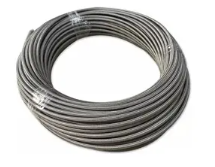
Top quality motorcycle brake hoses typically feature a stainless steel braided outer layer combined with a Polytetrafluoroethylene (PTFE) inner lining. These premium hoses can handle burst pressures well beyond 4,500 psi, which is actually about 50% higher than what FMVSS 106 requires as a minimum standard. The two-part design completely gets rid of the annoying ballooning problem found in regular rubber hoses, so when the rider applies the brakes, pressure goes straight through to the calipers without delay. Stainless steel braiding stands up against rocks and road grime that would wear down other materials, plus it helps keep things cool under high temperatures. Meanwhile, the PTFE inside doesn't react with common brake fluids like glycol ether or silicone-based ones. Independent tests have shown these hoses can withstand millions upon millions of flexing motions without any leaks forming, something really important for motorcyclists who ride rough trails or spend long hours on bumpy roads where constant vibrations are part of the experience.
Cold Flexibility, Ozone Resistance, and Fluid Compatibility — Critical for All-Season Motorcycles
Durability means more than just how much pressure something can take before breaking. It really comes down to how well materials hold up against different environmental conditions over time. High quality compounds stay flexible even at temperatures as low as minus 40 degrees Fahrenheit, so they won't crack unexpectedly while riding in cold weather. When it comes to ozone resistance, these products pass the SAE J1401 test standards, which stops those tiny cracks from forming on regular EPDM rubber hoses after about five years of use. What happens with fluid compatibility matters too. Standard ethylene propylene rubber tends to expand around 15% when it meets DOT 4 or 5.1 brake fluids, which weakens the seals and makes the brake lever feel soft instead of firm. But PTFE lined components don't change size at all. Motorcyclists who travel between hot desert areas and chilly mountain roads will notice this difference throughout the seasons, since these materials maintain consistent performance no matter what kind of weather they face.
Performance Validation: How Hydraulic Testing Predicts Real-World Motorcycle Brake Hose Reliability
Hydraulic testing simulates years worth of wear and tear on components within just days or weeks, catching problems long before they make it onto actual roads. Most manufacturers push their materials well beyond standard requirements, often testing at around 4,500 psi which is about half again what the FMVSS 106 regulations call for at 3,000 psi minimum. This helps ensure there's enough safety buffer when vehicles come to sudden stops. After that comes dynamic impulse tests where hoses get hit repeatedly with quick bursts of pressure similar to what happens when drivers slam the gas then brake hard over and over again. While all this goes on, engineering teams keep a close eye out for signs of weakness or degradation throughout every single cycle of testing.
- Fluid leakage at ferrule interfaces
- Micro-fractures in liner or braid layers
- Permanent deformation or elongation under load
When products undergo environmental stress tests, they face some pretty harsh conditions including temperatures ranging from -40 degrees Fahrenheit all the way up to 300 degrees, plus exposure to ozone and simulated salt corrosion. These tests basically recreate what happens in real world settings like along coastlines, high mountains, and busy city streets. Looking at all these different factors together helps engineers spot where parts start to wear out over time. The results have led to improvements in brake system designs that cut down on emergency stops caused by failures on roadways by almost half. A study released last year by automotive engineers showed these kinds of enhancements can make a big difference in vehicle safety across various driving conditions.
Proactive Safety: Visual and Tactile Inspection of Motorcycle Brake Hoses
Looking at and feeling brake hoses regularly turns out to be one of those cheap but really important ways to stop them from failing completely. Waiting until there's something wrong with how the brakes feel just isn't smart enough. According to what mechanics see in their shops, somewhere around 70% of all hose problems actually show up as things people can spot or feel during routine checks every month. That makes checking these hoses pretty much a no-brainer safety measure that saves lives in the long run.
Identifying Early Failure Signs: Cracks, Blistering, Corrosion, Kinks, and Swelling
Five key indicators demand close attention during every inspection:
- Cracks, especially at bend points near handlebars or suspension mounts, signal UV and flex fatigue—and worsen rapidly with continued exposure.
- Blistering indicates delamination between the inner liner and reinforcement braid, often preceding fluid weep or sudden rupture.
- Corrosion on metal fittings or stainless braiding compromises structural integrity; severe corrosion can reduce burst strength by up to 40%.
- Kinks, even subtle ones, create localized pressure hotspots and restrict flow—accelerating fatigue and increasing risk of separation.
- Swelling, particularly noticeable during brake application, reflects internal liner damage and is an urgent replacement trigger.
Inspect all flex zones—including where hoses route near triple trees, master cylinders, and calipers—using daylight and fingertip pressure to detect texture changes or soft spots. Replace any hose showing these signs immediately: once integrity begins to degrade, the rate of deterioration increases exponentially.
Table of Contents
- Why Regulatory Standards Define True Motorcycle Brake Hose Safety
- Material & Construction: What Makes a Motorcycle Brake Hose Truly Durable
- Performance Validation: How Hydraulic Testing Predicts Real-World Motorcycle Brake Hose Reliability
- Proactive Safety: Visual and Tactile Inspection of Motorcycle Brake Hoses