 EN
EN

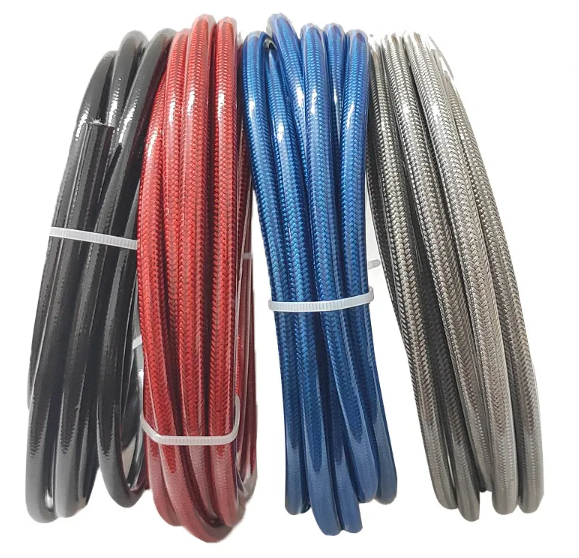
Thermal Performance of PTFE Braided Hose: Ratings, Stability, and Real-World Limits
Operating Range: From Cryogenic -200°C to Continuous 260°C Use
PTFE braided hoses stand out when it comes to thermal stability, covering an impressive range from super cold conditions down to -200°C all the way up to regular operation at 260°C. What sets them apart from rubber based options is how they keep their flexibility and hold pressure even through extreme temperature changes. The material's unique crystal structure means it doesn't get brittle in those freezing temps or start to soften when things get really hot. Because of this performance profile, these hoses are essential for things like moving liquid nitrogen around in semiconductor factories where temperatures hit about -196°C, or managing exhaust gases in industrial heating systems that run continuously at around 250°C. Tests done over time have shown something pretty remarkable too: after sitting at 260°C for 2,000 straight hours, there's still less than 5% compression set. That kind of durability proves the hose maintains its shape and strength even when subjected to serious heat over long periods.
Thermal Cycling Reliability: Evidence from ASTM D395 and ISO 8539 Testing
PTFE braided hoses really shine when they're exposed to those fast, repetitive temperature changes we see in industrial settings. Standard tests for thermal fatigue back this up pretty convincingly. According to ASTM D395 Method B testing, these hoses still have about 30% compression recovery even after sitting at 260 degrees Celsius for three whole days straight, which means they don't deform much over time. When put through ISO 8539's tough thermal cycling test involving 10,000 cycles from minus 65 to 230 degrees Celsius, there's absolutely no sign of leaks or structural issues developing. The numbers tell quite a story actually these PTFE hoses last roughly 15 times longer than their rubber counterparts before needing replacement. What makes them so reliable? It all comes down to how well the materials work together. PTFE has a very low thermal expansion rate (around 112 x 10^-6 per Kelvin) that lines up almost perfectly with stainless steel braids like 304 or 316 grades. This matching reduces stress between layers as temperatures fluctuate. This property keeps the hose intact and performing consistently, which is why they're commonly found in critical applications such as bleed air lines on aircraft engines where temperature extremes are routine, or in pharmaceutical manufacturing where freeze-thaw cycles happen regularly throughout production processes.
PTFE Braided Hose Construction: How Layered Design Enables Extreme-Duty Performance
Synergy of PTFE Inner Tube and Stainless Steel Braid (304/316)
What makes PTFE braided hose so effective comes down to how it's constructed with two main layers working together. At the core there's this seamless PTFE tube that just won't react chemically, stays slick on surfaces, and can handle extreme temperatures ranging from minus 200 degrees Celsius all the way up to 260 degrees. Even when exposed to harsh stuff like concentrated sulfuric acid at 98%, it doesn't let anything seep through or start breaking down over time. Wrapped around this inner layer is typically stainless steel braid made from either grade 304 or 316 depending on what the application needs. This outer layer gives the hose real strength against pulling forces, protects against wear and tear, and stands up well to whatever environment it finds itself in. Put these components together and you get something pretty special: the PTFE takes care of those tough chemical reactions and heat issues, while the metal braid handles all the physical stresses like pressure inside the hose, constant movement, and repeated bending without losing its shape or function. It acts kind of like armor for the hose, spreading out the force across the whole structure so nothing gets overstressed during operation.
Braid Geometry Effects on Pressure Rating and Flex Life
The way braids are arranged plays a major role in determining how much pressure a hose can handle and how long it will last before failing. When manufacturers tighten the braid angle to about 54 degrees, they get better load distribution over the PTFE liner inside. This actually boosts burst pressure by as much as 40% when compared to hoses with looser weaving patterns. But there's a catch too tight braiding cuts down on angular movement tolerance, which means the hose won't flex as well during testing according to ISO 8539 standards. Flex life drops somewhere between 15 and 20 percent under these conditions. On the flip side, wider angle braiding gives the hose more flexibility and makes it last longer when moving around dynamically, though at the expense of reduced maximum working pressure. Most companies tackle this balancing act by using different layering strategies. Single braid setups work best where space is limited and flexibility matters most, while dual braid constructions push working pressures beyond 5,000 PSI making them suitable for demanding applications like hydraulic systems or fuel lines. The spacing between individual strands (helix pitch) affects how well the hose handles vibrations too. Tighter coil spacing generally leads to improved fatigue resistance especially in situations involving frequent high frequency movements.
Chemical and Mechanical Resilience of PTFE Braided Hose in Harsh Environments
Proven Resistance to Aggressive Media: 98% Sulfuric Acid and Chlorine Gas at Elevated Temperatures
PTFE braided hose works exceptionally well when moving really aggressive chemicals at high temps, something we've seen firsthand with applications involving 98% sulfuric acid and chlorine gas at temperatures reaching around 260 degrees Celsius. What makes PTFE so resistant? Well, basically, it has this completely fluorinated structure that's non-polar. Because of this molecular makeup, there just aren't any spots where chemicals can latch onto and start reacting. Rubber and plastic alternatives tend to swell up, break down, or let stuff pass through them after being exposed for long periods. That's why PTFE remains the go-to choice for safely transferring chlorine in water treatment plants and handling concentrated acids during metal refining processes. When reinforced with stainless steel braiding, these hoses handle both harsh chemicals and physical stress pretty well too. They stand up against sudden pressure spikes, gritty particles, and vibrations caused by fluid movement. Plus, their slick surface prevents buildup and keeps fluids flowing smoothly without turbulence, which means less frequent cleaning and fewer production stoppages in essential industrial operations.
Critical Industrial Applications of High-Temp PTFE Braided Hose
Aerospace Hydraulic & Fuel Systems: Meeting FAA, EASA, and Fire-Test Standards
Aerospace hydraulic and fuel systems require PTFE braided hose that satisfies some pretty tough safety standards like FAA AC 20-127B, EASA CS-25, and MIL-DTL-8794. These applications need dependable fluid transfer through some seriously extreme temperature changes. Think about it: at cruising altitude temperatures can drop to -65°C, but right next to those hot turbine sections we're looking at around 260°C. The materials must handle this range without leaking, warping, or catching fire. What makes PTFE so valuable here is its non-flammable nature which stops fuel fires from spreading. Plus, the stainless steel braiding gives the hose real strength against all sorts of stresses including vibrations, abrasions, and pressure surges reaching as high as 5,000 PSI. And let's not forget those critical 15 minute direct flame tests required under FAR 25.869 and EASA CS-25.869 regulations. Hoses that pass these tests are essential for things like landing gear movement, thrust reverser systems, and auxiliary power units where any failure just isn't an option.
Table of Contents
- Thermal Performance of PTFE Braided Hose: Ratings, Stability, and Real-World Limits
- PTFE Braided Hose Construction: How Layered Design Enables Extreme-Duty Performance
- Chemical and Mechanical Resilience of PTFE Braided Hose in Harsh Environments
- Critical Industrial Applications of High-Temp PTFE Braided Hose