 EN
EN

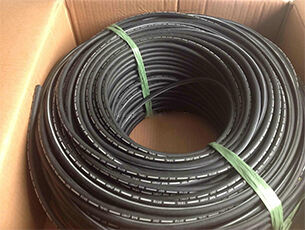
Why brake hoses are more than simple connectors: Their role in hydraulic pressure transmission
Brake hoses aren't just simple tubes running through the bike frame. They're actually vital components that carry essential hydraulic pressure from the handlebar lever all the way to the brake calipers. These flexible parts need to stay pliable while resisting any expansion when subjected to massive pressures over 1500 psi. This balance is crucial for maintaining proper brake response. Poor quality hoses tend to swell when pressed, which results in that annoying sponginess at the lever and slower brake activation. The dangers here aren't theoretical either. Standardized testing according to ISO 6805 shows exactly how much these hoses expand under stress. High end models made with special rubber blends reinforced with aramid fibers keep expansion below 1% even during sudden stops. This means riders still get that important connection feeling between their hands on the lever and what's happening at the wheels.
Common failure modes: Premature degradation due to heat, pressure, and pulsation stress
Three primary stressors attack motorcycle brake hoses:
- Heat cycling: Near-exhaust routing exposes hoses to 120°C+ temperatures, accelerating rubber oxidation
- Pressure fatigue: Constant 500–2,000 PSI cycles create micro-fractures in aging elastomers
- ABS pulsation: Modern systems induce 15–20 Hz pressure spikes that delaminate hose layers
TÜV Rheinland data reveals that uncontrolled fluid permeation through degraded inner tubes can reduce hydraulic pressure by 38% within five years—particularly problematic in tropical climates where humidity accelerates fluid contamination. Riders experience this as diminished braking power and excessive lever travel before complete failure.
Real-world impact: Case study on brake fade linked to hose permeability in tropical climates
According to a recent survey conducted across Southeast Asia in 2023, nearly two thirds of all downhill brake failures were linked to regular rubber hoses that let moisture seep through. When humidity gets absorbed into the brake fluid, it starts boiling way below normal temperatures around 150 degrees Celsius instead of the required minimum of 230 for DOT 4 fluids. This creates vapor lock problems when riders descend long hills. Motorcycle enthusiasts who switched to aftermarket hoses lined with fluoroelastomer saw their failure rate drop by almost four fifths over just two years. These special hoses stop water from getting inside in the first place. So what should riders check? Look for hoses certified under ECE R13-H standards that can withstand over half a million pressure cycles at 125 degrees Celsius. This becomes particularly important in tropical climates where brake performance tends to deteriorate most rapidly due to constant exposure to moisture.
Material Composition and Construction Quality of Rubber Brake Hoses
Inner tube materials: Fluoroelastomer vs. EPDM/NBR blends and resistance to swelling
The inner linings of rubber brake hoses are made from special compounds designed to stop fluids from seeping through. Fluoroelastomer, or FKM as it's commonly called, stands out because it really holds up against glycol based brake fluids. When tested according to ISO 1817 standards, these materials only swell by about 5% when immersed. Standard EPDM and NBR blends tell a different story though. They tend to expand between 10 and 15% when exposed to DOT 4 fluid, which becomes a serious problem after repeated exposure to high temperatures. The difference in how these materials handle permeability matters a lot for maintaining consistent hydraulic pressure. Brake systems using FKM liners keep most of their stopping power with only a 1 to 2% pressure loss, while cheaper alternatives suffer much greater losses ranging from 8 to 12%.
Reinforcement layers: Aramid vs. polyester braid strength and flexibility trade-offs
The way a hose is reinforced really affects how it performs when subjected to ABS pulsation forces. Motorcycle brake hoses made with aramid fiber braiding can withstand between 3,000 to 4,000 psi before bursting, which actually beats the SAE J1401 standards by about 60%. What's interesting is these hoses still keep their OEM level of flexibility even when riders make tight turns on the handlebars. On the other hand, polyester options tend to cut corners on durability just to save money. Testing done by TUV Rheinland showed this clearly: their tests found that polyester reinforced hoses started failing after around 14,000 pressure cycles, whereas the aramid ones kept going past 50,000 cycles without breaking down. That kind of difference matters a lot in real world riding conditions.
| Braid Material | Burst Strength | Fatigue Cycles | Flexibility Angle |
|---|---|---|---|
| Aramid Fiber | 3400–4000 psi | 50,000+ | 120° radius |
| Polyester | 2500–3000 psi | 14,000 avg | 95° radius |
Outer jacket durability: UV resistance and abrasion protection in harsh environments
External sheathing provides critical environmental defense. High-grade EPDM compounds maintain elasticity down to –40°F while offering 98% UV radiation blockage—essential for coastal or desert riding. When tested against ISO 6945 abrasion standards, carbon-black-infused jackets survived 1,000+ friction cycles before breach, while standard rubber covers failed at 300 cycles.
Emerging trend: Hybrid rubber-PTFE composite hoses for enhanced performance
Innovative hybrid designs fuse PTFE cores with rubberized exteriors, creating motorcycle brake hoses that eliminate fluid permeation while retaining vibration damping. These composites demonstrate 0.01% swell rates—outperforming pure rubber versions by 99%—while reducing pressure loss to just 0.5% at 1,500 psi.
Brake Fluid Compatibility and Chemical Resistance
Glycol-based fluids (DOT 3/4) and their effect on nitrile rubber integrity
Brake fluids based on glycol, such as DOT 3 and DOT 4 types, tend to soak up moisture as they age, which creates problems for nitrile rubber inner tubes inside brake systems. The absorption leads to actual physical swelling of these components. Tests show around 15 percent expansion happens when exposed to humidity, something that really weakens how well the parts hold together and makes them less effective at transmitting hydraulic pressure. When temperatures rise, this swelling gets worse fast. Mechanics see this all the time during summer months when brakes start leaking fluid or simply stop working properly (what's called brake fade). Safety experts have tested this phenomenon repeatedly, confirming what drivers experience firsthand on the road.
Why DOT 5.1 demands fluorocarbon-lined hoses: Swell index and ISO 13357 testing
DOT 5.1 fluid’s higher boiling point requires superior chemical resistance, necessitating fluorocarbon-lined brake hoses. These liners limit swelling to under 5% in ISO 13357 swell index tests, ensuring long-term reliability. Rigorous validation prevents fluid permeation and maintains pressure stability, especially in high-stress applications like ABS braking systems.
Pressure Performance: Burst Strength and Fatigue Resistance
Minimum industry standards: SAE J1401 and required burst strength (¥3,000 psi)
All rubber brake hoses must meet SAE J1401 standards, requiring a minimum burst strength of 3,000 psi. Premium options often withstand over 5,000 psi—critical when hydraulic pressure spikes during emergency braking. This margin prevents catastrophic failures under extreme loads.
Beyond static pressure: Pulse fatigue and real-world ABS-induced rupture risks
Static tests don’t reflect real-world stresses. Repeated pressure surges from Anti-lock Braking Systems (ABS) create micro-cracks in subpar hoses. In tropical climates, heat accelerates this fatigue, increasing rupture risks by 40% after 15,000 miles. High-flex zones near calipers demand reinforced construction.
Certified endurance: TÜV Rheinland data on high-cycle pressure performance
Leading manufacturers validate endurance through independent pulse testing. Recent TÜV Rheinland data shows top-tier brake hoses surviving over 1 million pressure cycles at 1,500 psi—exceeding ISO 11425 benchmarks. Always verify third-party certifications for pulse resistance, not just burst strength claims.
Certifications and How to Verify Genuine Quality in Brake Hoses
Decoding labels: The difference between claimed 'DOT compliant' and verified certification
When manufacturers slap on those "DOT compliant" labels, they're often just marketing fluff without any real proof behind them. True compliance isn't something companies can declare themselves responsible for. The real deal involves strict testing by outside experts against FMVSS 106 standards. Legit products should have both the DOT mark and a specific manufacturer code printed right there on the hose. These codes create an actual paper trail that proves authenticity. This matters a lot because industry experts say around three out of four fake car parts rely on misleading labels to trick buyers. Before making a purchase, take a closer look at these details because they tell the real story about product quality and safety.
- Embossed DOT markings (not stickered)
- Registered manufacturer identification codes
- Traceable certification numbers
Key standards to check: ECE R13-H, FMVSS 106, and manufacturer batch testing
Beyond DOT, ECE R13-H certification validates hydraulic motorcycle brake hose performance through:
- Pressure testing: Minimum burst strength of 3,000 psi
- Environmental resistance: UV/ozone exposure validation
- Flex endurance: 35+ MPa pulse cycles at 100°C
Reputable manufacturers conduct batch testing exceeding baseline requirements, with TÜV Rheinland data showing certified hoses withstand 150% more pressure cycles than uncertified alternatives. Demand test certificates for:
- FMVSS 106 compliance (US market)
- ECE R13-H approval (global validity)
- Production batch validation records
FAQ
What are brake hoses and why are they important?
Brake hoses are integral components of a motorcycle's brake system. They transmit hydraulic pressure from the handlebar lever to the brake calipers, enabling effective braking. High-quality brake hoses maintain pressure without swelling, ensuring proper brake response.
What are common failure modes of brake hoses?
Brake hoses commonly fail due to heat cycling, pressure fatigue, and ABS pulsation stress, which can cause rubber oxidation, micro-fractures, and delamination of hose layers.
How does humidity affect brake hose performance?
In tropical climates, humidity can be absorbed into the brake fluid, lowering its boiling point and causing brake fluid to vaporize. This leads to brake fade and increased risk of brake failure.
What materials are used in brake hose construction?
Brake hoses are constructed using inner tube materials like fluoroelastomer and EPDM/NBR blends, along with reinforcement layers like aramid or polyester braids. Outer jackets are often made from EPDM for UV and abrasion resistance.
How can I verify the quality of brake hoses?
Verify brake hose quality by checking for DOT markings, manufacturer identification codes, and traceable certification numbers. Look for certifications such as ECE R13-H and FMVSS 106.
Table of Contents
-
Material Composition and Construction Quality of Rubber Brake Hoses
- Inner tube materials: Fluoroelastomer vs. EPDM/NBR blends and resistance to swelling
- Reinforcement layers: Aramid vs. polyester braid strength and flexibility trade-offs
- Outer jacket durability: UV resistance and abrasion protection in harsh environments
- Emerging trend: Hybrid rubber-PTFE composite hoses for enhanced performance
- Brake Fluid Compatibility and Chemical Resistance
- Why DOT 5.1 demands fluorocarbon-lined hoses: Swell index and ISO 13357 testing
- Pressure Performance: Burst Strength and Fatigue Resistance
-
Certifications and How to Verify Genuine Quality in Brake Hoses
- Decoding labels: The difference between claimed 'DOT compliant' and verified certification
- Key standards to check: ECE R13-H, FMVSS 106, and manufacturer batch testing
- FAQ
- What are brake hoses and why are they important?
- What are common failure modes of brake hoses?
- How does humidity affect brake hose performance?
- What materials are used in brake hose construction?
- How can I verify the quality of brake hoses?