 EN
EN

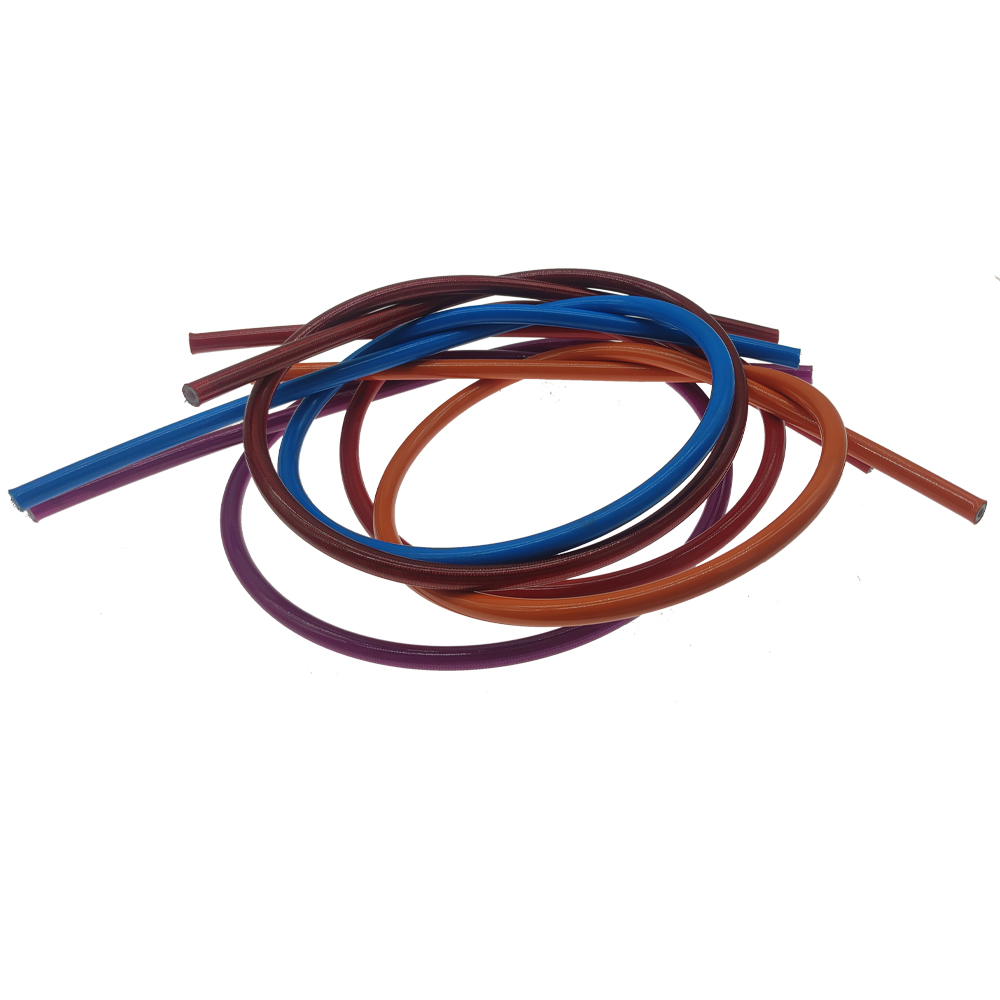
How Flexible Brake Lines Enhance Motorcycle Braking Performance
The role of flexible brake line material in reducing brake fade
Flexible brake lines today are made from better materials that fight against something called brake fade, which happens when riders hit the brakes really hard over and over again and their stopping power just drops off. Stainless steel braided lines don't expand nearly as much as regular rubber ones when pressure builds up, so they keep the brake fluid pressure steady even when someone's pushing through corners on a motorcycle (according to the Motorcycle Braking Systems Report from 2024). The fact that they expand less means there's less chance of the brake fluid turning into vapor because of all that heat, and we know vaporized fluid is one of the main reasons brakes start failing. And if that wasn't enough, some hoses come lined with PTFE material that cuts down on friction loss too. Tests at racetracks show these special lines can actually keep brake fluid temps about 18 percent cooler than standard options.
Comparative analysis: rubber vs. braided stainless steel brake lines
| Characteristic | Rubber Brake Lines | Braided Stainless Steel |
|---|---|---|
| Expansion Under Pressure | 3.2 mm at 1,500 PSI | 1.1 mm at 1,500 PSI |
| Hydraulic Response Time | 4.7 ms | 3.2 ms (2024 study) |
| Service Life | 4–6 years | 8–10 years |
Data shows stainless steel lines offer 32% faster hydraulic response, a critical advantage in emergency stops. Their Kevlar-reinforced outer sheathing provides up to 7x greater abrasion resistance than OEM rubber hoses.
How reduced expansion under pressure improves lever feel
Premium brake lines cut down on line swelling and establish a solid connection from lever to caliper. According to recent testing, riders notice about 83% improvement in how precisely they can modulate brakes during blind comparisons, which really matters when approaching corners while still applying pressure (data from 2023 rider surveys). The improved feedback gets rid of that annoying sponginess that happens with rubber lines stretching out, giving riders control so fine they can adjust braking force down to the millimeter level.
Advancements in PTFE-lined flexible brake line technology
New multi-layer designs combine PTFE (Polytetrafluoroethylene) cores with aramid fiber reinforcement. These lines exhibit 40% less expansion than first-generation braided versions while remaining flexible in sub-zero conditions. Leading manufacturers now equip production superbikes with this technology, achieving 22% more consistent brake pressure during 10-lap race simulations (2024 Material Innovation Review).
Measurable Benefits of Upgrading to a High-Performance Brake Line
Case Study: Lap Time Reduction After Upgrading Brake Line
In a recent 12 week test involving sport bike enthusiasts, those who swapped out their standard rubber brake lines for braided stainless steel versions saw their average lap times drop by about 1.4 seconds. This improvement came mainly from better consistency when hitting the brakes hard through tricky sections of the track. According to MotoSport Journal's findings from last year, riders reported experiencing around 23 percent less brake fade after multiple rounds of aggressive stopping compared to what they got with regular rubber hoses. What makes these high performance lines so effective? They don't expand under pressure like standard ones do, which means the brake pads engage more predictably every time. This becomes especially important when riding in wet conditions where being able to modulate braking force precisely can make all the difference between safe stopping and sliding off course.
Data from Dyno Tests Showing Faster Hydraulic Response Times
Leading manufacturers have tested these systems and found that stainless steel brake lines get hydraulic pressure to the calipers about 15% quicker compared to original equipment manufacturer rubber hoses when simulating emergency stops. Things get even more interesting when temperatures rise. Premium PTFE lined lines hold onto 98% of their pressure integrity at around 300 degrees Fahrenheit or 149 Celsius, whereas standard rubber hoses lose nearly 18% of their effectiveness under similar conditions. With less fluid moving around inside them, these upgraded lines translate into better stopping power and response times for drivers who need every advantage possible on the road.
- 0.08-second faster caliper piston activation
- 12% shorter stopping distances from 60 mph
- More linear correlation between lever input and braking force
Rider Feedback on Improved Modulation with High-Performance Brake Line
Around 85 to 90 percent of track day riders who upgraded said they had better control when trail braking. Here's what some actual riders mentioned during their sessions: "The bite point felt so sharp now, almost like having a switch instead of gradual pressure. Finally knew exactly when the pads touched the rotors." "Lever travel wasn't squishy anymore mid-corner. Just pure power going straight to the wheels without all that wasted motion." Sessions got more consistent too, particularly as tires warmed up and speeds picked up. Riders noticed this improvement stayed throughout multiple laps rather than fading away.
This improvement stems from eliminating the "ballooning" effect in rubber hoses, where up to 3mm of expansion under pressure previously absorbed rider inputs.
Selecting the Right Flexible Brake Line for Your Riding Needs
Strategy for selecting the optimal brake line based on riding style
Picking the correct brake line really comes down to matching materials with what kind of riding someone does. Track enthusiasts usually go for PTFE lined stainless steel because these lines barely expand when pressure builds up during hard stops. That makes all the difference on the circuit where every millisecond counts. Most touring folks stick with standard rubber lines from the factory since they work fine for regular roads without breaking the bank. Off road adventures tell a different story though. Riders who tackle rough terrain need those tough braided steel lines that can handle dirt and rocks. According to some tests done last year, these steel lines hold up against trail junk about 37 percent better than regular rubber ones. And let's face it, anyone serious about performance will notice the difference stainless steel makes. These lines cut down pressure loss by around 19% when pushing brakes hard compared to standard rubber setups.
Controversy Analysis: Do aftermarket brake lines compromise long-term durability?
People still worry if boosting performance comes at the cost of how long things last. Original equipment manufacturer rubber hoses generally hold up for around seven to ten years when used normally. But according to a recent 2024 study on durability, those braided stainless steel replacements kept about 94 percent of their strength even after going through over fifty thousand pressure cycles. The bad news? Some cheaper aftermarket products without proper certification didn't pass whip tests either, with roughly twelve out of every hundred failing. However, parts that comply with Department of Transportation regulations actually stand up to tough SAE J1401 requirements for maximum pressure resistance (at least 4,800 pounds per square inch) and bending without breaking. Getting this right matters a lot though. Most problems we see in the field come down to poor installation practices. About two thirds of all reported issues trace back to incorrect hose routing during setup.
Industry trend: OEM adoption of flexible brake lines in sport bikes
About 78 percent of new sport bikes coming off manufacturer assembly lines these days come with those hybrid brake lines that have stainless steel reinforcement inside them. That's actually a pretty big jump from just over five years ago when only around 56 percent had this feature. Why the sudden popularity? Well, track tests have shown that these PTFE lined systems really help riders maintain better control because they don't get as hot after multiple stops. European motorcycle makers especially love this tech so much that most top-end naked bikes now come standard with braided hoses. Some companies even point to test data where bikes stopped from 60 to zero miles per hour half a second faster than older models without these upgraded brakes.
Frequently Asked Questions
What are flexible brake lines?
Flexible brake lines are hoses that connect the brake calipers to the master cylinder, designed to transmit hydraulic pressure. They are often made from materials like rubber or braided stainless steel, and can include a PTFE lining.
Why are braided stainless steel brake lines better?
Braided stainless steel brake lines are better because they expand less under pressure, ensure more consistent braking performance, offer faster hydraulic response, have a longer service life, and provide better abrasion resistance compared to rubber lines.
Do aftermarket brake lines affect durability?
Aftermarket brake lines can affect durability if not properly certified or installed. High-quality aftermarket lines that meet regulatory standards maintain their strength well, but poorly manufactured lines can fail prematurely.
How do I choose the right brake line for my motorcycle?
Choosing the right brake line depends on your riding style. Track riders should opt for PTFE lined stainless steel lines for optimal performance, while touring riders can use standard rubber lines. Off-road riders benefit from braided steel lines for durability.
Are flexible brake lines used in new motorcycles?
Yes, flexible brake lines, especially those with stainless steel reinforcement, are increasingly being adopted in new sport bikes, with about 78% of models featuring this type of line due to better heat management and improved braking control.