 EN
EN
How Stainless Steel Motorcycle Brake Lines Improve Braking Performance
The Problem: Hydraulic Expansion in OEM Rubber Brake Lines
The stock rubber brake lines on motorcycles tend to expand when pressure builds up during braking, which means they absorb some of the hydraulic energy rather than passing it through properly. When this happens, riders notice a spongy feeling at the lever and find that their brakes take longer to respond. Tests done on dynamometers show that original equipment manufacturer rubber lines can actually swell by around 11 percent at pressures hitting 1,500 psi. This expansion really affects how well the bike slows down and makes it harder to control braking force precisely, especially when riding aggressively or needing sudden stops in emergencies.
The Solution: PTFE Core + Stainless Braid Eliminates Volumetric Expansion
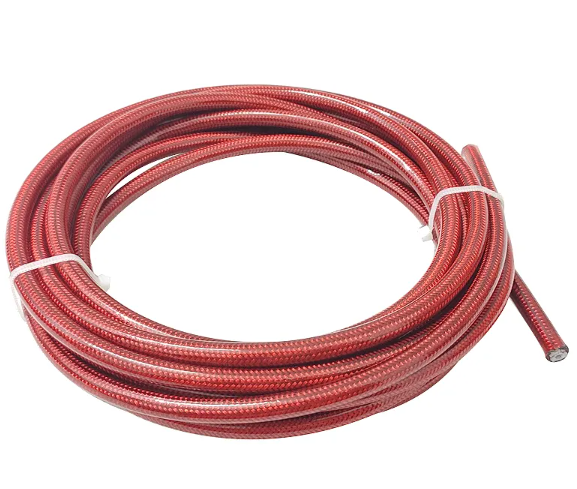
Performance brake lines are made with a PTFE inner layer that doesn't let fluids seep through, wrapped in two layers of stainless steel. This PTFE material stops brake fluid from getting absorbed and keeps the inside volume steady no matter what temperature it gets to, from as cold as minus 40 degrees Celsius all the way up to over 200 degrees. The steel braiding around it is usually either type 304 or 316 stainless, which can handle really high pressure without expanding outward even when pressures exceed 3,000 pounds per square inch. What this means for drivers is almost no delay between pressing the pedal and the brakes working, quick feedback at the lever, and predictable stopping power that stays consistent throughout every drive session.
Real-World Validation: 18% Reduced Lever Travel on Yamaha R7 with HEL Kit
Instrumented track testing on a 2022 Yamaha R7—using stock calipers, rotors, and DOT 4 fluid—confirmed measurable gains after installing the HEL Performance stainless braided kit and performing sequential bleeding:
| Metric | Rubber OEM Lines | Stainless Braided Lines | Improvement |
|---|---|---|---|
| Lever travel | 42mm | 34mm | 18% reduction |
| 60–0 MPH stopping | 41.3 meters | 38.1 meters | 7.7% shorter |
| Pressure variance* | ±12% | ±3% | 75% more consistent |
*Measured across 10 repeated hard-braking cycles at 100ºC fluid temperature.
This lever-travel reduction translates directly to faster reaction times and greater control at the edge of adhesion—critical for both track performance and real-world safety.
Braided Motorcycle Brake Line Quality Tiers: What Actually Defines Responsiveness
Material & Construction: Why Multi-Layer PTFE and Double-Stainless Braid Matter
True responsiveness stems from construction that eliminates hydraulic lag—not just branding or price. Top-tier lines feature:
- Multi-layer PTFE cores, engineered to resist permeation and maintain dimensional stability across extreme thermal ranges.
- Double-stainless braiding, which reduces volumetric expansion significantly more than single-braid alternatives—validated by independent tests showing 10–18% less lever travel.
- Precision-crimped, DOT-compliant fittings, tested to exceed 3,000 PSI without leakage. Poorly crimped fittings increase failure risk by 47%, per the 2023 SAE Brake Systems Report.
Certification & Testing: DOT, TÜV, and Track-Proven Compliance as Quality Indicators
Certifications are not marketing checkboxes—they reflect verifiable engineering rigor:
- DOT FMVSS 571.106 certification ensures minimum burst strength (≥2,500 PSI), resistance to fluid degradation, and long-term compatibility with DOT 3/4/5.1 fluids.
- TÜV ISO 9001 certification validates consistent manufacturing processes—especially critical for banjo joint integrity and micro-leak prevention.
Real-world validation matters too: leading lines survive 100+ heat cycles on track without stiffness loss or pressure drift. In contrast, non-certified alternatives show a 22% performance decline after just five track days—evidence that compliance correlates directly with durability and consistency.
Precision Installation of Motorcycle Brake Lines: Fitment, Bleeding, and Torque Best Practices
Model-Specific Fitment: Avoiding Kinks, Strain, and Clearance Issues
When it comes to suspension systems, model specific kits really do the trick because they're designed specifically for the way each car's suspension bends, turns, and routes components around. This cuts down on all sorts of problems that come with generic solutions or homegrown fixes. Getting things wrong can lead to serious issues though. Bent lines happen quite often when installation isn't right, which according to some research from SAE back in 2022 actually reduces fluid flow by about 41%. Then there's the issue of tension when the suspension goes all the way out, something that contributes to roughly 32% of those DIY horror stories we hear about. Parts rubbing against each other is another common problem nobody wants. Before tightening everything down completely, take time to check how much space exists throughout the entire range of motion both up/down and left/right. And remember, the factory specs usually call for somewhere between 12 and 18 Newton meters when securing those fittings. Going too tight might crack something important while leaving them loose just invites leaks later on.
Air-Free Bleeding: Sequential vs. Pressure Methods for Optimal Hydraulic Integrity
Residual air is the #1 cause of sponginess post-installation—even with premium lines. Two proven methods ensure hydraulic integrity:
- Sequential bleeding, starting at the caliper farthest from the master cylinder (e.g., rear ↔ front), requires 6–8 full fluid cycles per line to evacuate trapped micro-bubbles.
- Pressure bleeding, using regulated air ¤15 psi, forces fluid uniformly through the system and achieves bubble-free results 40% faster than manual techniques.
Regardless of method, always confirm lever firmness before riding. Any residual sponginess indicates incomplete bleeding—and compromised brake force transmission.
Long-Term Durability of Performance Motorcycle Brake Lines Under Real Riding Conditions
Stainless steel braided brake lines really beat the factory rubber ones when it comes to both how responsive they feel and how long they last. The reason? PTFE doesn't react chemically and stainless steel won't corrode, so we're eliminating all those problems that plague rubber hoses over time. Rubber tends to break down from sunlight exposure, cracks from ozone in the air, soaks up moisture, and gets soft when hot. When drivers push their cars hard on race tracks, through muddy trails, or during long periods of heavy braking, these conditions create extra stress on the system. But if someone installs these PTFE and stainless lines correctly, they hold up way better than any rubber alternative would under similar conditions.
A lot of problems on the road actually come from how things were installed in the first place (think kinks in hoses, banjos tightened too much, or lines routed wrong somewhere) or just plain old lack of maintenance, not because the materials themselves wore out. If riders check their systems regularly looking for signs like wear spots, bulges, or leaks and fix anything suspicious right away, good quality performance lines can easily stick around as long as the bike does. Sure, there are some tough situations where parts might need replacing sooner, especially when riding through areas with lots of road salt during winters. Those cases usually call for a change around 5 to maybe 7 years mark, though honestly most factory rubber stuff tends to go bad somewhere between 2 and 3 years anyway according to what we see in shops.
Table of Contents
- How Stainless Steel Motorcycle Brake Lines Improve Braking Performance
- Braided Motorcycle Brake Line Quality Tiers: What Actually Defines Responsiveness
- Precision Installation of Motorcycle Brake Lines: Fitment, Bleeding, and Torque Best Practices
- Long-Term Durability of Performance Motorcycle Brake Lines Under Real Riding Conditions