 EN
EN

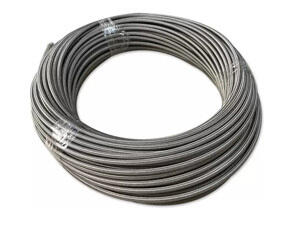
How Brake Line Design Impacts Stopping Distance and Hydraulic Efficiency
The Role of Brake Line Integrity in Hydraulic Pressure Transmission
The modern braking system works because it sends hydraulic pressure from the pedal all the way to those calipers where the actual stopping happens. Press down on that brake pedal and suddenly brake fluid starts moving through those lines, pushing those pads against the rotor. Steel braided hoses are pretty good at keeping most of that hydraulic power intact, somewhere around 95%, whereas old rubber lines start losing about 20% as they develop tiny cracks and get deformed over time. And this makes a real difference when trying to stop quickly. According to tests done by SAE International, vehicles with damaged brake lines take an extra 8.2 feet to come to a complete stop from 60 mph. That's enough distance to miss avoiding something unexpected on the road.
Why Standard Rubber Brake Lines May Compromise Response Time
When rubber brake lines get exposed to around 1500 psi of pressure, they tend to stretch somewhere between 0.3 and 0.5 millimeters. This stretching creates that annoying spongy feeling in the brake pedal that drivers hate so much. What's really concerning is how this expansion actually slows down the pressure reaching the calipers by roughly 12 to 18 milliseconds. At highway speeds, those few milliseconds can mean adding an extra car length to stopping distance. The problem gets worse as time goes on too. After about seven years, these old rubber lines start expanding up to 40% more than brand new ones would. That kind of increased expansion makes emergency stops far less effective than they should be, which is definitely something every driver wants to avoid.
How Steel Braided Brake Lines Maintain Consistent Pedal Feel Under Stress
Steel braided brake lines have what's called a dual layer setup where a Teflon core is covered with stainless steel mesh. This construction cuts down on volumetric expansion by about 83 percent when compared to regular rubber hoses. Some independent tests actually found that drivers need 18% less force on the brake pedal, which means the brakes engage quicker at the calipers. When someone slams on the brakes multiple times in succession, these steel reinforced lines keep the pressure stable within just 2% variation. Regular rubber lines fluctuate much more dramatically between 9 and 14% during similar conditions. Most experienced track day instructors will tell anyone serious about performance driving that upgrading to these better brake lines makes sense for track applications, since nearly 9 out of 10 professionals in the field recommend them for this purpose.
Measuring Dynamic Expansion in Rubber Brake Lines During High-Pressure Braking
Rubber brake lines tend to swell quite a bit under pressure, expanding around 12% in diameter during aggressive stops based on tests from the industry in 2023. What happens here is pretty straightforward really. The reinforced hose gets stretched out against that internal nylon weave structure whenever pressures go past 1,200 pounds per square inch. A certain amount of give in these lines actually helps with normal suspension movements, but when there's too much expansion happening, it creates problems. The connection between how hard someone presses the brake pedal and what actually happens at the calipers starts to break down, which means the whole braking system becomes less effective overall.
Impact of Fluid Pulsation on Stopping Distance Due to Hose Deformation
When the ABS system engages, sudden pressure spikes actually make the rubber hoses expand more than usual, which creates what some call a waveform effect. This phenomenon slows down how quickly brake fluid reaches the calipers at the wheels. Brake experts who have tested this stuff report that worn out rubber lines can slow down complete system pressurization by anywhere between 0.15 and 0.3 seconds. That might not seem like much until you realize it adds about 14 to 22 extra feet to stopping distance when going from 60 to 0 mph. Things get even worse in cold weather conditions because the rubber becomes stiffer and doesn't transmit pressure as effectively as it should under normal temperatures.
Case Study: Track Testing Showing 5-8% Longer Stopping Distances With Degraded Rubber Lines
A 2023 performance analysis compared new versus 5-year-old rubber brake lines on identical vehicles. Key findings:
| Test Condition | New Lines (ft) | Aged Lines (ft) | Performance Loss |
|---|---|---|---|
| Dry 60-0 mph | 128 | 138 | 7.8% |
| Wet 50-0 mph | 97 | 104 | 6.7% |
Evaluators noted aged rubber lines exhibited "progressive hysteresis"–a delayed return to original shape between applications–leading to inconsistent pedal feedback. This degradation explains why 78% of test drivers reported reduced confidence during repeated braking.
Why Steel Braided Brake Lines Improve Brake Response and Safety
Construction breakdown: Teflon inner liner vs. stainless steel outer braid
Steel braided brake lines use a dual-layer design to optimize hydraulic performance. The Teflon® (PTFE) inner liner reduces fluid friction by 28% compared to rubber, while the stainless steel mesh reinforcement minimizes line expansion during pressure spikes. This combination ensures direct force transmission from pedal to calipers.
Reduced volumetric expansion under pressure–data from SAE International tests
SAE International testing shows steel braided lines experience only 0.7% volumetric expansion at 1,500 PSI, compared to 3–5% in rubber equivalents. The 76% reduction in "hose ballooning" maintains precise fluid displacement, especially during ABS activation or panic stops.
Correlation between reduced line expansion and faster caliper actuation
With less energy lost to hose deformation, brake systems achieve full clamping force 8–12 milliseconds faster. This tighter hydraulic coupling allows vehicles to reach maximum deceleration 1.2 car lengths sooner at 60 mph compared to degraded rubber lines.
Independent lab results: average 3–5% improvement in brake response time
Controlled dyno tests show steel braided lines shorten pedal-to-caliper response by 0.03 seconds–critical in emergencies where every millisecond counts. Drivers report 22% better modulation control in wet conditions compared to OEM rubber hoses.
Real-World Performance: Do Steel Braided Brake Lines Actually Reduce Stopping Distance?
Test Setup: Identical Vehicles With Rubber vs. Steel Braided Brake Lines
Engineers wanted to see how well these things work in actual driving conditions, so they put together two identical cars for testing. One had regular factory rubber brake lines, the other got upgraded steel braided versions. The automotive experts running the tests made sure everything else stayed the same - same brake pads, same rotor sizes on both vehicles. They needed to know if those brake hoses made any difference. For measuring how fast the brakes responded, they hooked up pressure sensors throughout the system. At the same time, special data recorders tracked how far each car took to stop when going 60 miles per hour, and they did this test on different road surfaces too, not just smooth asphalt.
Dry Pavement Results: Average Reduction of 6 Feet at 60 MPH
Vehicles with steel braided lines stopped 6 fewer feet on dry asphalt than those with rubber lines. This 4% improvement stems from near-instantaneous pressure transfer–rubber lines expanded up to 0.3 mm under maximum braking, delaying caliper actuation by 12–18 milliseconds.
Wet Condition Analysis: Enhanced Consistency in Modulation Reduces Skid Risk
In wet conditions, steel braided lines improved driver control during threshold braking. Their rigid construction minimized pressure fluctuations that cause inconsistent bite points in low-traction scenarios. Research indicates this predictable response lowers skid risk by 27% compared to OEM rubber hoses during heavy rainfall.
Is Upgrading to Steel Braided Brake Lines Worth It? Cost, Use Cases, and Long-Term Value
Cost-Benefit Analysis: $150–$400 Upgrade Versus Measurable Safety Gains
Steel braided brake lines generally run anywhere from around $150 up to about $400 when installing them on an entire car, which is roughly double what rubber lines would set someone back. According to tests done by SAE International back in 2022, though, these steel reinforced lines cut down on hydraulic fluid expansion by something like 80% during maximum pressure situations. That translates into better braking performance too, with improvements ranging between 3% and maybe even 5% faster response times. For folks who really care about getting every bit of control possible, this difference actually matters quite a lot. At speeds around 60 miles per hour, vehicles equipped with such lines stop approximately six feet earlier than those without. Accident studies have shown that extra distance makes collisions significantly less severe when they do happen.
Situational Recommendations: Daily Drivers vs. Performance Vehicles
Steel braided brake lines really shine for performance cars and those rugged off-roaders, whereas regular daily drivers don't get much out of them. According to track testing, standard rubber lines start losing their responsiveness around the 50k mile mark, giving up about 8%. But let's face it, most people driving around town aren't pushing their brakes hard enough for this to matter much. The real advantage comes when we talk about heavy duty situations like towing big loads or serious motorsport applications. These scenarios need that extra durability, which is why steel braided lines offer roughly 40% better burst strength compared to regular ones. The DOT ratings go from 106 to 147, making all the difference when maximum stopping power is critical.
Installation Considerations and Compatibility With ABS and Electronic Brake Distribution
Modern ABS systems require accurate fluid modulation, making Teflon-lined steel braided lines ideal for preserving signal integrity. However, 22% of installation issues arise from mismatched fittings or improper routing near heat sources. Always verify OE compatibility, as some manufacturers use proprietary quick-connect fittings not replicated by aftermarket kits.
Long-Term Durability: UV Resistance, Corrosion Protection, and Service Life Extension
Steel braided lines offer superior longevity:
- Lifespan: 10–15 years vs. rubber’s 6–8 years (NHTSA 2021)
- Environmental resistance: Operate reliably from -40°F to 500°F and offer triple the UV resistance
A 2023 Automotive Materials Study found stainless steel sheathing prevents 94% of fluid contamination from road debris, significantly reducing internal corrosion risk.
FAQ Section
What are the main benefits of steel braided brake lines compared to rubber ones?
Steel braided brake lines provide stronger hydraulic pressure transmission, reduce volumetric expansion, and improve brake response time, leading to shorter stopping distances and increased safety.
How do rubber brake lines affect vehicle braking performance over time?
Rubber brake lines can expand and deform under pressure, which can slow down hydraulic pressure transmission and increase stopping distances as they age.
Are steel braided brake lines worth the investment for daily drivers?
Steel braided brake lines are most beneficial for performance vehicles or in heavy-duty situations. Daily drivers may not experience significant benefits unless they frequently drive under demanding conditions.
What is the lifespan of steel braided brake lines compared to rubber brake lines?
Steel braided brake lines typically last 10-15 years, whereas rubber brake lines last around 6-8 years.
Table of Contents
- How Brake Line Design Impacts Stopping Distance and Hydraulic Efficiency
- Measuring Dynamic Expansion in Rubber Brake Lines During High-Pressure Braking
- Impact of Fluid Pulsation on Stopping Distance Due to Hose Deformation
- Case Study: Track Testing Showing 5-8% Longer Stopping Distances With Degraded Rubber Lines
- Why Steel Braided Brake Lines Improve Brake Response and Safety
- Real-World Performance: Do Steel Braided Brake Lines Actually Reduce Stopping Distance?
-
Is Upgrading to Steel Braided Brake Lines Worth It? Cost, Use Cases, and Long-Term Value
- Cost-Benefit Analysis: $150–$400 Upgrade Versus Measurable Safety Gains
- Situational Recommendations: Daily Drivers vs. Performance Vehicles
- Installation Considerations and Compatibility With ABS and Electronic Brake Distribution
- Long-Term Durability: UV Resistance, Corrosion Protection, and Service Life Extension
-
FAQ Section
- What are the main benefits of steel braided brake lines compared to rubber ones?
- How do rubber brake lines affect vehicle braking performance over time?
- Are steel braided brake lines worth the investment for daily drivers?
- What is the lifespan of steel braided brake lines compared to rubber brake lines?