 EN
EN

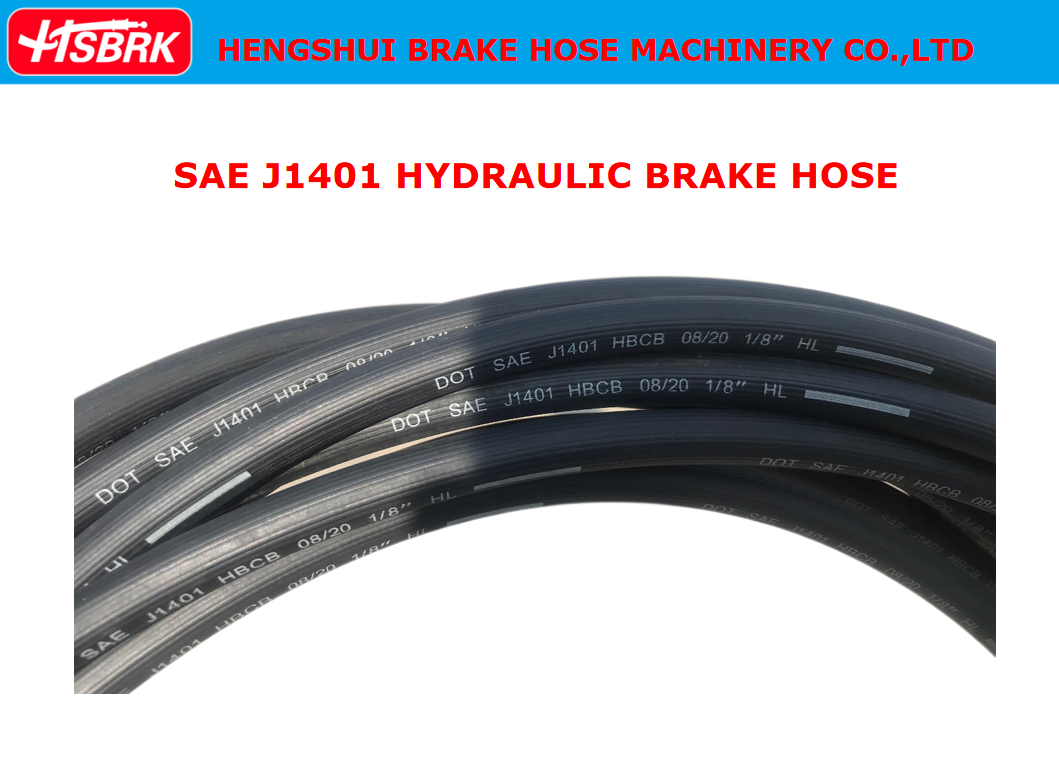
Why High-Temperature Resistance Is Critical in Brake Hoses
Understanding High-Temperature Resistance in Brake Hoses
High-temperature resistant brake hoses maintain structural integrity under extreme heat by using materials like PTFE (Polytetrafluoroethylene) liners and stainless-steel reinforcement. These components prevent softening, swelling, or delamination—failures that can compromise braking performance during repeated hard stops.
How Heat Affects Standard Brake Hose Performance
At sustained temperatures above 300°F (149°C), standard rubber hoses lose 40% of their tensile strength, according to the 2024 Automotive Safety Report. This thermal fatigue leads to a spongy pedal feel and delays in hydraulic pressure transfer, increasing stopping distances by up to 18% in emergency scenarios.
Thermal Degradation and Its Impact on Braking Systems
Heat cycling accelerates hose degradation through three primary mechanisms:
- Polymer breakdown: Rubber compounds crack as cross-linking bonds rupture
- Brake fluid vaporization: Boiling points drop 25°F (14°C) for every 15,000 miles of use
- Internal erosion: Particulate from degrading hoses clogs ABS valves
A 2022 Department of Transportation study found thermal degradation contributes to 22% of brake line failures in commercial vehicles.
Material Science Behind Thermal Resilience in Brake Hoses
Advanced hoses utilize multilayer construction to maximize thermal resilience:
| Layer | Function | Temperature Threshold |
|---|---|---|
| PTFE core | Fluid containment | 500°F (260°C) |
| Aramid fiber sleeve | Pressure stabilization | 400°F (204°C) |
| Stainless-steel braid | Abrasion/expansion resistance | 1,200°F (649°C) |
This design reduces heat-induced expansion by 83% compared to OEM rubber hoses, ensuring reliable pressure transmission under stress.
The Role of Brake Fluid Stability Under High Heat
Using high temp hoses is actually pretty important for keeping glycol ether based brake fluids safe from absorbing moisture. When this happens, the boiling point drops significantly, sometimes by as much as 100 degrees Fahrenheit (around 38 Celsius) in systems that are already contaminated. According to NHTSA figures from last year, about two thirds of those sudden braking problems linked to fluid issues happened because the hoses got too hot for what they could handle. Getting the right kind of heat resistant hose really matters since it stops vapor lock issues and keeps the fluid's thickness stable no matter what temperature range we're talking about. These ranges typically span from super cold at minus 40 degrees all the way up to scorching 500 degrees Fahrenheit.
Advanced Materials Revolutionizing High-Performance Brake Hoses
Stainless Steel Braided Hoses: Strength and Heat Dissipation
When it comes to brake hose construction, stainless steel braiding makes all the difference for both strength and temperature control. At around 300 degrees Fahrenheit, these reinforced hoses only expand about 2%, whereas regular rubber ones can stretch up to 12% according to last year's automotive materials study. That means drivers get better pedal feel even when pushing hard through corners or down steep hills. Plus, the metal weave serves another important function too. It actually soaks up heat generated during braking and pulls it away from the sensitive inner layers of the hose. And speaking of durability, this same steel layer stands up much better against road debris and general wear over time.
PTFE Liners: Superior Thermal and Chemical Resistance for Brake Hose Longevity
PTFE liners withstand continuous exposure to 500°F without sacrificing flexibility. In performance vehicle testing, PTFE-based hoses showed 68% less internal degradation than EPDM rubber equivalents after 15,000 miles of severe service. Their non-stick surface minimizes buildup of brake fluid breakdown byproducts, reducing the risk of flow restrictions.
High-Performance Elastomers and Polymer Composites
Fluoroelastomers (FKM) and aramid-reinforced polymers offer superior balance between flexibility and heat resistance. These materials retain structural integrity above 250°F—temperatures where traditional nitrile rubber loses 40% of its tensile strength. Industry studies show hybrid elastomer designs reduce heat-induced cracking by 83% over five-year service intervals.
Case Study: Rubber vs. Braided Stainless Steel Brake Hose Performance
A 2024 fleet vehicle analysis revealed significant performance differences:
| Metric | Rubber Hose | Steel-Braided Hose | Improvement |
|---|---|---|---|
| Heat Cycling Failures | 22% | 1.8% | 92% |
| Pressure Retention | 84% | 98% | 14% |
| Replacement Interval | 3 years | 8+ years | 167% |
The results confirm steel-braided hoses deliver substantial reliability gains in high-stress environments despite higher initial costs.
Cost vs. Longevity: Evaluating the ROI of Upgraded Brake Hose Materials
Premium brake hoses typically cost 50–70% more upfront but last up to three times longer, reducing lifetime maintenance expenses by 41%. Commercial fleets report an average 18-month return on investment due to reduced downtime and warranty claims, positioning thermally resilient hoses as a strategic upgrade.
Durability and Performance Under Extreme Operating Conditions
Brake Hose Expansion Under Combined Pressure and Thermal Stress
When someone slams on the brakes hard, the temperature at certain points can go over 300 degrees Fahrenheit. Standard rubber hoses tend to expand around 12 to 15 percent when they're subjected to both pressure and this kind of heat according to some tests done by SAE J1401 standards. What happens next? The expansion actually makes the brake pedal feel sluggish because about a quarter second gets wasted while the hydraulic system deals with stretching the hose instead of pushing the calipers properly. That's why many manufacturers now use multi layer stainless steel braided hoses which only expand less than 3%. These upgraded hoses maintain better control since they transmit force straight through without losing much energy, making them especially useful for those long downhill stretches where consistent braking performance matters most.
Long-Term Impact of Heat Cycling on Brake System Integrity
According to research from a 2023 fleet analysis, regular rubber hoses tend to lose around 40% of their tensile strength after going through approximately 15,000 heat cycles, which is roughly what happens during three years of city driving conditions. These tiny cracks forming inside the hose liner actually speed up how much fluid gets absorbed into the material. This causes the hose to swell over time and shrink in size somewhere between 0.8 to 1.2 millimeters in diameter. When this happens, it creates problems with brake systems including increased drag on brakes and pads wearing out unevenly across different parts of the vehicle.
Growing Demand for Reliability in Performance and Emergency Vehicles
Fire departments now require brake hoses rated for 482°F continuous operation following a 2022 NFPA analysis linking 18% of apparatus braking failures to heat-induced hose ruptures. Motorsport regulations similarly mandate survival of 10-second exposure to 660°F exhaust heat without structural failure.
Preventing Internal Delamination from Brake Fluid Breakdown
Cross-linked fluoroelastomer liners resist degradation from moisture-contaminated brake fluid. In controlled tests, these liners exhibited 94% less blistering than standard rubber when exposed to glycol-based fluid at 356°F for 72 hours, significantly reducing the risk of internal delamination.
Enhancing Braking Response and Driver Safety Through Heat-Resistant Design
How Heat-Resistant Brake Hoses Improve Pedal Feel and Feedback
Standard rubber hoses can expand up to 8% under extreme heat (SAE International 2023), resulting in a soft, unresponsive pedal. Heat-resistant designs maintain rigidity, delivering consistent feedback and enabling drivers to modulate braking force with greater precision—improving reaction times by up to 0.2 seconds in emergency situations.
Reducing Brake Fade During Repeated Hard Braking: Data From NHTSA Field Study (2022)
An 18-month NHTSA field study found vehicles equipped with heat-resistant brake hoses experienced 43% less increase in peak braking distance during mountain descent simulations. Key factors included:
- 27% lower brake fluid vaporization rates
- 15% reduction in caliper pressure loss after 10 consecutive panic stops
- Near-zero hose ballooning at temperatures above 350°F
These improvements directly enhance safety during demanding driving conditions.
Real-World Performance: Track-Day Vehicles With Upgraded Brake Hoses
Professional drivers using PTFE-lined stainless steel brake hoses recorded 3.1-second faster average lap times on 2.5-mile circuits compared to OEM rubber hoses. The upgraded systems retained 94% of initial brake torque over 30-minute track sessions, versus just 67% in baseline configurations.
Adoption in Emergency Response Fleets for Mission-Critical Safety
Fourteen U.S. fire departments have standardized thermal-resistant brake hoses since 2021, reporting:
| Metric | Improvement | Source |
|---|---|---|
| Service intervals | 58% longer | Fleet Maintenance Report 2023 |
| Brake-related incidents | 72% fewer | IAFC Safety Survey |
These upgrades ensure reliable braking during extended operations and yield an average lifetime savings of $1,200 per vehicle.
Meeting Industry Standards and Compliance for Aftermarket Brake Hoses
Key regulations: FMVSS 106 and SAE J1401 compliance
Aftermarket brake hoses must comply with FMVSS 106 and SAE J1401 standards, which specify requirements for burst resistance, temperature tolerance (-40°F to 302°F), and hydraulic stability. These include a minimum 4,000 PSI burst pressure and 100 hours of salt spray corrosion resistance—benchmarks well beyond typical operational demands.
Global safety standards for automotive brake hose certification
Manufacturers must also meet regional certifications such as ECE R90 (European Union) and JIS D2601 (Japan). These align testing protocols for heat cycling (up to 5,000 cycles at 250°F), impulse pressure endurance, and ozone resistance—essential for durability in humid or coastal environments.
Ensuring aftermarket upgrades meet OEM and regulatory benchmarks
Third-party validation through DOT-certified laboratories ensures aftermarket hoses match OEM performance and avoid compatibility issues. For example, elastomer formulations must demonstrate no more than 2% swell when exposed to DOT 3/4/5.1 brake fluids at 185°F—a critical safeguard against hydraulic fade during sustained braking.
FAQ
Why is high-temperature resistance important in brake hoses?
High-temperature resistance in brake hoses is crucial because it prevents failures caused by softening, swelling, or delamination of the materials under heat. This ensures efficient and reliable braking performance during repeated hard stops.
What materials are used for high-temperature resistant brake hoses?
Materials like PTFE liners and stainless-steel reinforcement are commonly used in high-temperature resistant brake hoses. These materials help maintain the structural integrity of the hose even under extreme heat conditions.
How does heat affect standard rubber brake hoses?
Standard rubber brake hoses can lose up to 40% of their tensile strength at temperatures above 300°F, leading to delayed hydraulic pressure transfer and increased stopping distances during emergencies.
What advantages do stainless-steel braided hoses offer?
Stainless-steel braided hoses provide superior strength and temperature control, expanding only about 2% under heat as compared to up to 12% in rubber hoses. They also help dissipate heat better, improving overall durability and pedal feel.
How do heat-resistant brake hoses enhance safety?
Heat-resistant brake hoses maintain rigidity under extreme heat, resulting in better pedal feedback and quicker reaction times during emergency braking. They also reduce brake fade and increase safety in challenging driving conditions.
Table of Contents
- Why High-Temperature Resistance Is Critical in Brake Hoses
-
Advanced Materials Revolutionizing High-Performance Brake Hoses
- Stainless Steel Braided Hoses: Strength and Heat Dissipation
- PTFE Liners: Superior Thermal and Chemical Resistance for Brake Hose Longevity
- High-Performance Elastomers and Polymer Composites
- Case Study: Rubber vs. Braided Stainless Steel Brake Hose Performance
- Cost vs. Longevity: Evaluating the ROI of Upgraded Brake Hose Materials
- Durability and Performance Under Extreme Operating Conditions
- Enhancing Braking Response and Driver Safety Through Heat-Resistant Design
- Meeting Industry Standards and Compliance for Aftermarket Brake Hoses
- FAQ